Praying Prayer Hand Christian: A Stitcher's Review
When evaluating religious imagery for embroidery, the margin for error is incredibly slim. Faith-based projects carry emotional weight, and as makers, we know that a distorted hand or poorly registered fingers can turn a reverent symbol into something distracting. As an experienced designer reviewing the Praying Prayer Hand Christian machine embroidery design, my primary focus is not just on the aesthetic beauty of the digital file, but on its structural integrity when needle meets fabric. This review breaks down how this design performs in real-world production scenarios, specifically for those of us running craft businesses, managing Etsy shops, or creating meaningful personalized gifts.
First Impressions: Reverence Meets Technical Clarity
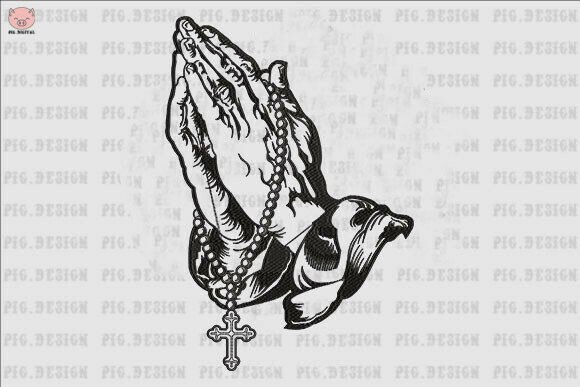
Upon loading the embroidery file into my editing software, the immediate impression is one of balanced composition. In the Religion Faith category, designs often suffer from being either too stark or overly ornate. This Praying Prayer Hand Christian design strikes a necessary middle ground. The silhouette is distinct, which is crucial because hands are notoriously difficult to embroider; if the finger separation isn't clear, the result looks like a mitten rather than a prayerful gesture.
The visual personality feels traditional yet accessible. It avoids aggressive shading that might date the piece, opting instead for clean lines that suggest peace and devotion. For a digital embroidery file, this simplicity is actually a technical advantage. It suggests that the digitizer prioritized stitch flow over unnecessary complexity, which usually translates to better registration on the hoop. When I look at this design, I immediately envision it as a centerpiece for a boutique product line rather than just a standalone graphic. It has the versatility to work across demographics, from nursery decor to adult apparel.
Real-World Application: The Custom Sweatshirt Test
To truly judge this machine embroidery design, I mentally placed it in a current best-seller scenario: a heavyweight cotton sweatshirt for a church retreat or a faith-based lifestyle brand. Sweatshirt embroidery presents specific challenges due to the fleece backing and stretchy knit face. A design with erratic jump stitches or excessive density will cause puckering that no amount of steaming can fix.
In this context, the Praying Prayer Hand Christian design serves as an excellent anchor. If utilizing a satin stitch border or outline, the width appears sufficient to cover the texture of the fleece without sinking in. For the interior, if the design uses a fill stitch, the density seems calibrated to provide coverage without creating a bulletproof vest effect on the chest. This balance is vital for custom apparel. Customers want to wear their faith comfortably, not display a stiff board on their garment.
For Etsy sellers and small shop owners, this design also translates beautifully to tote bag design projects. Canvas provides a stable base, allowing the finer details of the fingers and any accompanying script to shine. I can see this working exceptionally well as part of a bundled collection—perhaps paired with a verse on the reverse side—to increase the perceived value of the finished product. The design’s mood elevates a simple canvas bag into a meaningful personalized gift suitable for baptism gifts, confirmation keepsakes, or holiday embroidery projects.
Navigating Fabric Limitations and Hoop Constraints
While the Praying Prayer Hand Christian design is versatile, professional judgment requires acknowledging where caution is needed. Hands require precision. If you are attempting this on highly textured fabrics like terry cloth or boucle, the fine details defining the fingers may get lost. In such cases, I would strongly recommend testing whether this file functions effectively as an applique design or if it relies entirely on direct embroidery. If it is purely stitched detail, you must use a heavy-duty water-soluble topping to prevent the stitches from burying themselves in the pile.
Baby embroidery is another critical use case for religious motifs. However, infant garments are small and delicate. Before committing this design to a onesie or bib, verify the hoop size requirements against the available print area. Oversizing a dense prayer hand on a tiny garment can distort the neckline or armholes. Furthermore, check the stitch density. Baby skin is sensitive, and a high-density fill stitch on thin jersey knit can be abrasive. You may need to adjust the density parameters in your software or select a lighter variation of the file if provided.
Dark fabrics also demand attention. If the thread colors specified in the design are light, ensure your underlay is robust enough to prevent the dark fabric from grinning through. Conversely, if stitching white thread on white fabric for a subtle tone-on-tone look, the texture of the running stitch and satin elements becomes the sole visual interest. In these monochromatic applications, the quality of the digitization pathing matters more than ever.
Commercial Viability and Brand Consistency
For creative entrepreneurs and apparel decorators, consistency builds trust. Using the Praying Prayer Hand Christian design across multiple SKUs helps establish brand recognition. Whether applied to an embroidered patch for hats, a kitchen tea towel, or a pillow cover, the design maintains its identity. This coherence is what separates a hobbyist from a professional craft business.
When creating printable mockups for your online listings, pay attention to how the design renders digitally versus physically. Because this is a religious symbol, accuracy is non-negotiable. Ensure your digital previews match the actual stitch-out proportions. Misleading mockups lead to returns and negative reviews. I recommend stitching out a sample on your most commonly used fabric and photographing that for your listing images. This transparency reassures buyers of the handmade product quality.
Regarding commercial embroidery, always verify the licensing terms included with the design assets. Just because a file is high-quality does not automatically grant unlimited commercial reproduction rights. Confirm whether you can sell the physical items, use the image in marketing, or if there are caps on production volume. Protecting your business means respecting intellectual property while delivering excellence to your clients.
Essential Pre-Stitch Protocol for Makers
Before launching this Praying Prayer Hand Christian design into a full production run or gifting it to a loved one, adhere to this practical checklist:
- Test on Scrap Fabric: Never stitch directly on the final garment first. Use a scrap of the exact same material and stabilizer combination to check for puckering and registration.
- Verify Thread Contrast: Religious art relies on clarity. Ensure your thread palette offers enough contrast against the background fabric so the praying hands are instantly recognizable.
- Check Stabilizer Pairing: Knits require cut-away stabilizer; wovens generally prefer tear-away. The wrong choice will ruin the drape of the fabric.
- Inspect Small Details: After the test stitch-out, examine the fingertips and any facial features (if present). Are they defined? Do the threads overlap cleanly?
- Review Licensing: Double-check the usage rights for both personal and commercial applications before listing any small shop product for sale.
- Wash Test: If creating items like tea towels or baby clothes that require frequent laundering, wash and dry your test swatch to ensure the design holds up without distorting.
The Praying Prayer Hand Christian design represents a valuable asset for the serious embroiderer. It bridges the gap between spiritual significance and technical execution. By approaching this embroidery project with a critical eye toward fabric compatibility, stabilization, and end-use, you transform a simple digital file into a lasting testament of faith and craftsmanship. Whether you are fulfilling a custom order or stocking your shelves for the holiday season, this design offers the professional foundation necessary to create products that resonate deeply with their recipients.